Showrunner Terry Matalas has detailed the planned first season of a long-discussed spinoff that would have continued the story set up at the conclusion of Star Trek: Picard. Three years after that series ended, the creative vision for what came next has finally been outlined in public. The finale of Star Trek: Picard Season 3 closed with Commander LaForge formally retiring the USS Enterprise-D while Jean-Luc Picard learned that his son Jack had not been assigned to the Titan after all. Instead, that vessel had been rechristened the Enterprise-G and placed under the command of Captain Seven of Nine, creating a clear launching point for further adventures.
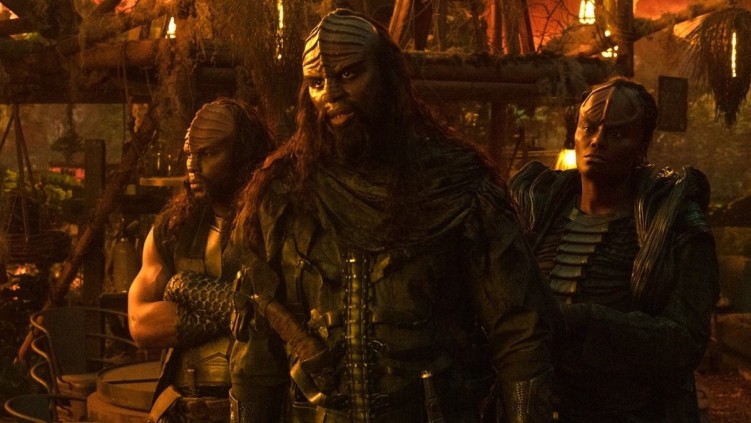
At STLV: Trek to Vegas, the world’s largest annual Star Trek convention, Matalas laid out the core premise he had developed for Season 1 of Star Trek: Legacy. The story would have centered on the Klingons, a species the franchise has long used as stand-ins for the Russians. Matalas intended to ground the season in real-world tension with Russia and to weave the conflict directly into the life of Worf. Alexander, Worf’s son, was positioned as one of the unstable elements stirring trouble across Klingon space and driving the central crisis of the season.
During the Terry Matalas panel, Terry explains the premise for the first season of Star Trek: Legacy. #STLV
— First Flight Podcast (@firstflightpod.bsky.social) August 7, 2026 at 2:12 PM
[image or embed]
This approach would have leaned into the classic political allegory that has defined many Klingon storylines throughout Star Trek history. By focusing on internal fractures within the Klingon Empire and the role of a next-generation character like Alexander, the narrative aimed to explore legacy in multiple senses. The presence of Picard’s own son, Jack Crusher, alongside Alexander would have reinforced the show’s title, linking the personal histories of two prominent families to larger galactic stakes. The season was designed to examine how the unresolved tensions of the past continue to shape the present for both the Federation and its longtime adversaries.
The concept stands in notable contrast to the direction later taken with the Klingons in Star Trek: Starfleet Academy. In that series, the Klingons faced near-extinction after a cosmic event known as the Burn destroyed dilithium supplies across the galaxy. The resulting explosions left the Klingon homeworld of Qo’noS almost uninhabitable, forcing the species to confront survival without abandoning their historic ethical codes. Starfleet eventually identified a potential new homeworld and staged a conflict over it as a means of assistance. Matalas’s earlier pitch, by comparison, kept the focus on contemporary geopolitical parallels rather than a post-Burn struggle for existence.
The story would no doubt have evolved during development, yet the core idea of using the Klingons to reflect ongoing real-world tensions would have remained timely. Alexander’s involvement as a source of instability offered a direct connection to Worf’s established history while giving the new series a distinct identity separate from previous Klingon arcs. Combined with the Enterprise-G crew led by Seven of Nine and the continued presence of Jack Crusher, the season was structured to deliver on the promise of legacy both thematically and narratively.
Paramount passed on Star Trek: Legacy. The decision left the detailed Season 1 pitch unrealized, despite the clear setup provided by the Star Trek: Picard finale and the creative groundwork Matalas had prepared. The Enterprise-G, Captain Seven of Nine, and the intertwined fates of the Picard and Worf families were left without the continuation that had been envisioned.
The revelation of these plot details years later offers a clearer picture of the series that might have followed one of the more recent chapters in the Star Trek franchise. From the retirement of the Enterprise-D to the rechristening of the Titan and the planned exploration of Klingon instability through Alexander, the outline shows a carefully considered path forward that was ultimately not taken.