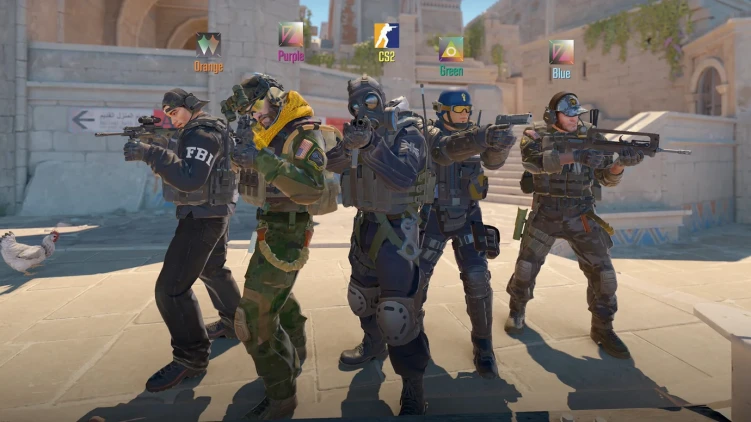
Valve is forcefully rejecting claims that its loot box systems in games like Counter-Strike 2, Dota 2, and Team Fortress 2 amount to illegal gambling, instead likening them to time-honored collectibles that generations have enjoyed without controversy.
The company is locked in a legal battle with New York Attorney General Letitia James, who filed suit on February 25, 2026, in Manhattan state court. The complaint accuses Valve of breaching New York's constitution and penal laws by selling keys that unlock randomized virtual cosmetic items—commonly called loot boxes—arguing the mechanic constitutes "quintessential gambling" with addictive potential, particularly for younger users. James is seeking injunctive relief, restitution, disgorgement of profits, and treble damages. Valve insists the features mirror longstanding, widely accepted consumer products and has declined to implement the sweeping changes the state has demanded.
Valve laid out its position in a comprehensive statement posted on Steam, detailing its ongoing cooperation with the New York Attorney General's office since early 2023. The statement, accessible at Steam, describes how the company supplied extensive documentation on its anti-gambling safeguards, including the locking of over one million accounts tied to third-party gambling operations, fraud, and theft. Valve also pointed to built-in protections such as trade reversals and cooldown periods intended to shield users and reduce the incentive for exploitative item trading.
The lawsuit outlines the loot box process in detail: players spend $2.49 on a key to open a container, with the vast majority of outcomes yielding low-value items. "Nearly every user who buys a key and opens a loot box receives a virtual item that is commonplace and worth only pennies — far less than what they spent to open the loot box." The appeal, according to the state, lies in "the potential of winning a large prize," where rare skins can fetch thousands of dollars on the secondary market. In Counter-Strike 2, the odds of pulling the rarest cosmetics sit as low as 0.26%, a structure the Attorney General compares to lotteries despite the items being purely decorative and having no impact on gameplay performance.
Valve pushes back by emphasizing similarities to physical collectibles that have long been part of mainstream entertainment. The company explicitly compares its loot boxes to "baseball cards, Pokemon, Magic the Gathering, and Labubu," products where consumers purchase sealed packs or blind boxes in pursuit of rare finds that can then be traded or sold. This format, Valve notes, dates back decades in both physical and digital forms, with the earliest digital precursors appearing as far back as 2004. Crucially, the company stresses that opening loot boxes remains entirely optional—most players experience the games without ever purchasing a key, since the contents are cosmetic only and provide no competitive edge.
"We have serious concerns with many of the alterations the NYAG claims are necessary to make to our games," Valve declared, highlighting its resistance to proposed restrictions. "First, the NYAG seems to believe boxes and their contents should not be transferable," meaning you shouldn't be able to sell or transfer your digital items, which you can currently do through user-to-user trades or the community market. Valve frames transferability as a core consumer advantage, enabling players to recover value from unwanted drops in a manner comparable to reselling physical trading cards. Eliminating this capability, the company warns, would diminish user satisfaction and limit creative freedom in game development.
"The NYAG also proposed," Valve continued, "to gather additional information (beyond what we normally collect in the course of processing payments) about each game user on the off-chance someone in New York was anonymizing their location to appear outside of New York, such as by using a VPN. This would have involved implementing invasive technologies for every user worldwide." Valve contends that such sweeping monitoring would require intrusive global tracking systems, posing serious privacy risks to millions of players far beyond New York's borders.
Valve further asserts that the NYAG "demanded" the company "collect more personal data about our users to do additional age verification." This requirement has drawn particular ire from Valve, which positions itself as a staunch protector of user privacy amid growing industry scrutiny—similar to the recent outcry over Discord's data practices. The company is deliberate in highlighting its resistance, stating that it "knows our users care about the security of their personal information, and we believe it’s in our and their interest to only collect the information necessary to operate the business and comply with law." Valve adds that standard payment processors already incorporate age verification, rendering further invasive demands redundant and disproportionately burdensome.
Although Valve expresses respect for the legislative process in New York, it notes that the state legislature has repeatedly considered—and declined to enact—specific regulations targeting loot boxes. Rather than settle on terms it views as detrimental, Valve has chosen to litigate, arguing that the proposed concessions would establish a damaging precedent across the gaming industry.
As the case heads toward resolution in court, the outcome could carry significant implications for how developers design and monetize in-game economies worldwide, potentially influencing virtual marketplaces that generate billions annually. For the time being, Valve stands firm on its existing approach, presenting loot boxes as harmless entertainment no different from ripping open a pack of collectible cards.