As fans around the world celebrate Star Wars Day on May the 4th, fresh data highlights the enduring appeal of the iconic space saga in American households. The annual event serves as a timely reminder of how deeply embedded the Star Wars universe remains in popular culture, with generations continuing to engage with its expansive storytelling through both classic entries and new installments.
According to Nielsen, U.S. viewers viewed 33 billion minutes (equivalent to 550 million hours) of Star Wars content across linear TV and streaming in 2025. Disney+ serves as the streaming home to all things Star Wars, with the Mouse House having acquired the franchise in 2012. This impressive consumption figure reflects the saga’s ability to captivate audiences nearly five decades after the original film’s release, with viewing split between traditional linear broadcasts and modern streaming platforms.
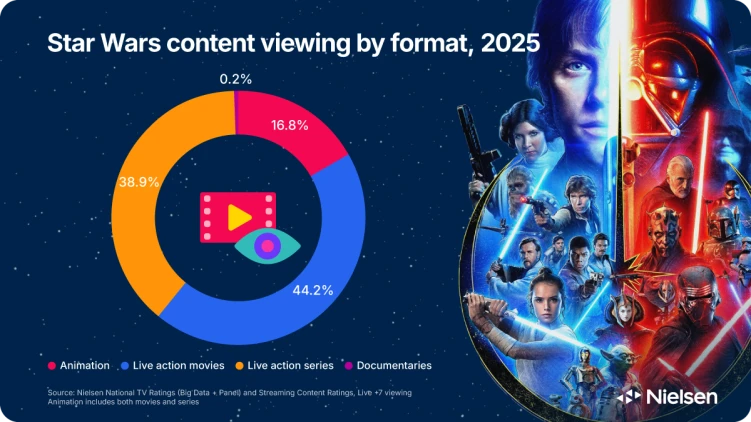
The Star Wars films accounted for the biggest share of the viewing at 44.2 percent. Live-action shows made up 38.9 percent, while Star Wars animated projects accounted for 16.8 percent. Documentaries about the franchise accounted for just 0.2 percent of all viewing. Among individual titles, A New Hope was the most viewed, followed by The Phantom Menace and then Rogue One.
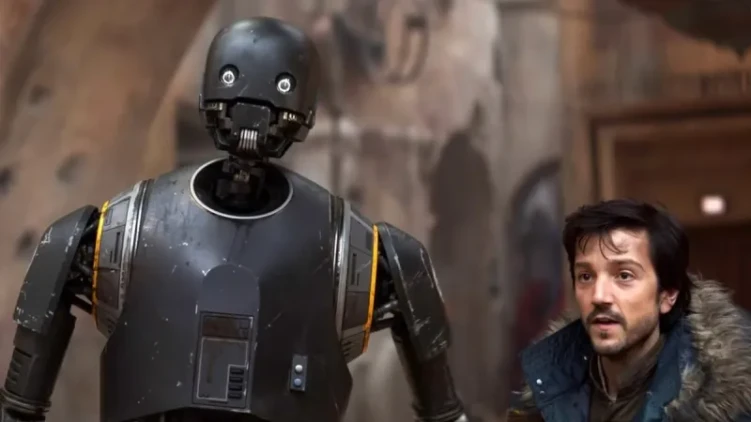
In the live-action series category, Andor led with 7.4 billion minutes consumed. The series benefited significantly from the rollout of its highly anticipated second season between April and May 2025, which helped it secure a spot on the Nielsen Top 10 Streaming Originals chart for six consecutive weeks. Following Andor in viewership were Skeleton Crew and The Mandalorian.
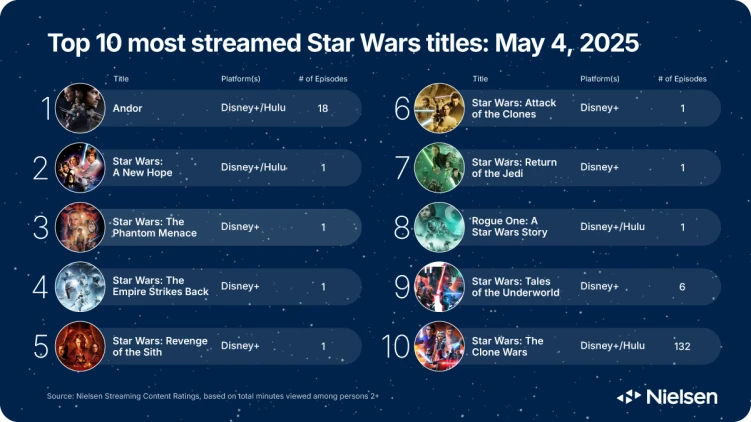
Nielsen’s breakdown for Star Wars Day itself on May 4, 2025, showed audiences tuned in for 637 million minutes, equivalent to 10.6 million hours, of Star Wars content. Andor topped the list of most-viewed titles that day, a result aligned with the timing of new episode releases. It was followed by A New Hope, The Phantom Menace, The Empire Strikes Back, and Revenge of the Sith.
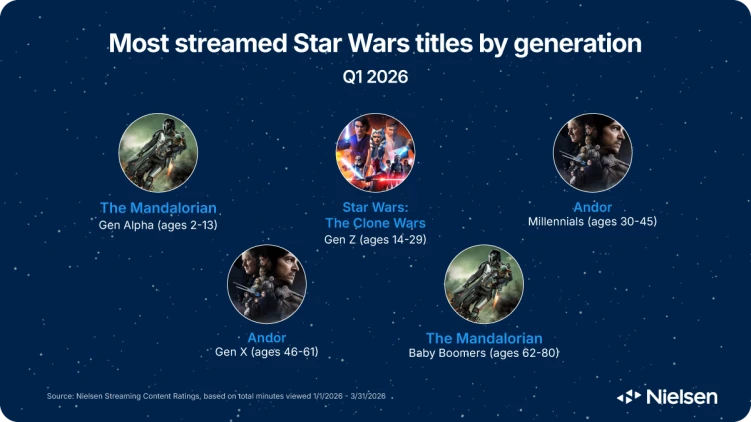
Additional Nielsen insights examined Star Wars popularity by age demographics during the first quarter of 2026. The Mandalorian proved especially popular among both Gen Alpha viewers and Baby Boomers. Gen Z audiences showed particular interest in the animated series The Clone Wars. Millennials and Gen X, meanwhile, gravitated most toward Andor.
These comprehensive statistics paint a picture of a franchise that successfully bridges generational divides while adapting to evolving consumption habits. The strong performance of the original trilogy films in overall minutes watched reaffirms their status as cultural touchstones, providing the narrative foundation that newer projects continue to build upon. At the same time, the robust numbers for recent live-action series demonstrate ongoing appetite for serialized storytelling that delves deeper into the Star Wars lore, exploring complex characters and moral ambiguities within the galaxy far, far away.
The data further emphasizes the strategic value of coordinated release timing, particularly evident in how Andor’s second season launch drove sustained engagement not only on Star Wars Day but throughout the surrounding period. Such alignment between content drops and key calendar events helps amplify visibility and contributes meaningfully to annual totals. Moreover, the even distribution of viewing across linear TV and streaming underscores the importance of multi-platform availability in today’s fragmented media landscape, ensuring that Star Wars remains accessible regardless of how audiences prefer to watch.
With Disney+ anchoring the digital ecosystem for the franchise, the combination of legacy content and fresh additions continues to fuel interest. The minimal share attributed to documentaries suggests that while behind-the-scenes looks have niche appeal, the primary draw remains the fictional narratives themselves. As development on future Star Wars projects proceeds, these viewing patterns offer clear indicators of what elements resonate most strongly—whether epic cinematic adventures, character-focused series, or animated explorations of earlier timelines.
The breakdown by content type reveals a clear preference hierarchy that guides future creative decisions. Films continue to dominate because they deliver self-contained, high-stakes spectacles that appeal broadly, while live-action television allows for extended character development and world-building that rewards dedicated viewers. Animated content, though smaller in share, maintains a loyal following particularly among younger demographics seeking adventures set in different eras of the timeline. This balanced portfolio approach has enabled Star Wars to sustain relevance across decades of changing media trends.
Overall, the 2025 figures confirm Star Wars’ position as a perennial powerhouse in entertainment, capable of drawing massive collective viewing hours while appealing to diverse audience segments. From families revisiting childhood favorites to newer fans discovering the saga through streaming, the franchise’s broad reach ensures its stories will continue inspiring wonder and imagination for years to come. (Word count: 412)