Universes Beyond sets have achieved outstanding success in Magic: The Gathering, consistently leading in sales figures, player participation, and overall market performance, even as some voices in the community have raised concerns about the growing presence of licensed crossovers. This strong reception has prompted questions about whether the game should pivot entirely to external properties. Yet Magic: The Gathering leadership continues to champion a balanced approach that preserves the game’s original intellectual property alongside these popular collaborations.
In a recent post on Blogatog, Magic: The Gathering Head Designer Mark Rosewater directly addressed the topic, reiterating the strategic reasons for keeping a significant portion of releases rooted in the game’s own universe.
I feel like I give this same answer once a month: 1) Our property is important to us. We are making a TV show with Netflix and have a movie deal. We need to keep building it. 2) There are complications that come with working with licensors. Having half the sets be our own gives us an important ability to adapt to schedules. 3) External properties that will fit the needs of a Magic set are a resource which we have to be careful with. Doing our own sets helps lengthen how long Universes Beyond will last. It is good business for us to have sets of our own property.
Rosewater’s explanation underscores the long-term vision for Magic: The Gathering. The first point emphasizes that the core Magic: The Gathering multiverse remains a vital asset. Ongoing media projects, such as the Netflix series and an upcoming film, require continuous development of original lore, characters, and planes to create cohesive storytelling that spans cards, books, digital platforms, and screen adaptations. Without dedicated in-house sets, these expansions would lack the foundational world-building necessary for sustained success across entertainment verticals.
The second factor highlights operational realities of licensing. Partnering with external rights holders introduces scheduling uncertainties, approval cycles, and production constraints that can disrupt the annual release cadence. Maintaining roughly half the sets as fully owned Magic: The Gathering content provides essential flexibility, allowing the design and production teams to pivot quickly when external timelines shift or unexpected opportunities arise.
The third consideration focuses on sustainability. Suitable licensed properties that translate effectively into Magic: The Gathering’s mechanical and flavorful framework are finite resources. Spacing out Universes Beyond releases with original sets prevents rapid exhaustion of high-quality crossover candidates, ensuring the program can deliver fresh, exciting collaborations for many years rather than burning through them in a short burst.
Collectively, these points illustrate a deliberate business strategy. By investing in its own property, Magic: The Gathering secures creative independence, mitigates external risks, and positions the brand for diversified growth. The approach allows the game to evolve its rich multiverse while still welcoming guest universes that attract new players and delight existing ones.
What non-Universes Beyond MTG sets are coming in 2026?
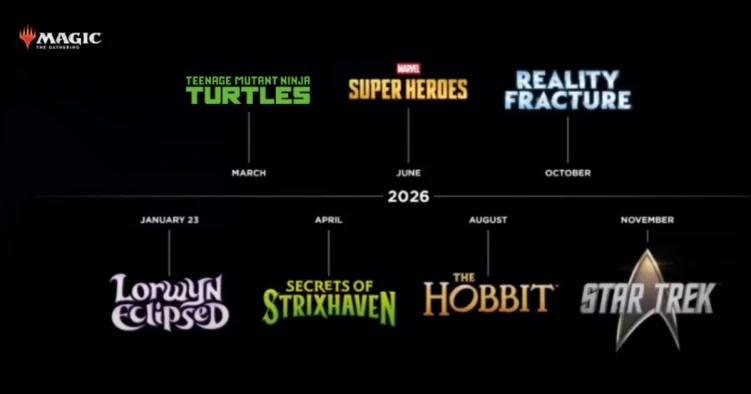
Magic: The Gathering players seeking stories and mechanics drawn exclusively from the game’s own multiverse have three dedicated in-universe releases scheduled for the year.
Lorwyn Eclipsed was released on January 23, 2026. This set delivered a long-awaited return to the dual planes of Lorwyn and Shadowmoor, blending light and dark themes while reintroducing fan-favorite creature types such as kithkin, boggarts, faeries, and elves through a fresh narrative lens.
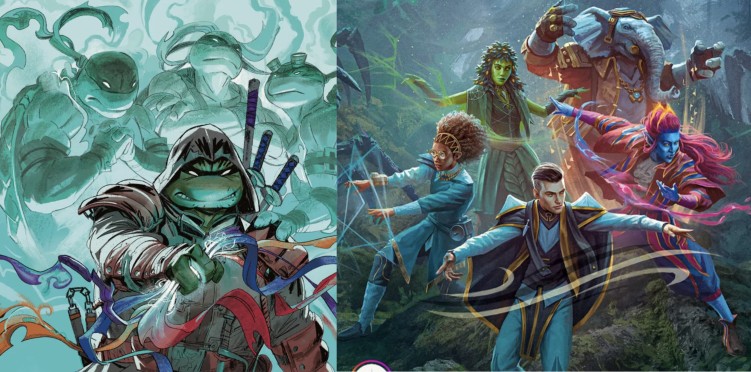
Secrets of Strixhaven launches on April 24, 2026. The expansion deepens the exploration of Arcavios and its renowned university, shifting focus to off-campus adventures and the personal growth of magical scholars across the five colleges, expanding on beloved mechanics and lore from prior Strixhaven visits.
Reality Fracture arrives on October 2, 2026. Serving as the dramatic conclusion to the multi-year Metronome Arc, this climactic set promises multiverse-shaking revelations, the unveiling of a major villain, and innovative gameplay elements that tie together recent story threads involving key characters like Jace and Loot.
These three sets ensure that the heart of Magic: The Gathering—its original planes, ongoing saga, and signature mechanical identity—receives consistent attention throughout 2026.
While these non-Universes Beyond releases anchor the schedule with pure Magic: The Gathering storytelling, the year also features a strong slate of crossover content that broadens the game’s appeal. Magic: The Gathering | Teenage Mutant Ninja Turtles debuts on March 6, Magic: The Gathering | Marvel Super Heroes follows on June 26, Magic: The Gathering | The Hobbit lands on August 14, and Magic: The Gathering | Star Trek concludes the calendar on November 20.
This carefully calibrated mix of original and licensed sets demonstrates Magic: The Gathering’s commitment to honoring its roots while embracing new audiences through high-profile partnerships, securing the game’s position as a dynamic and enduring tabletop experience for years ahead.