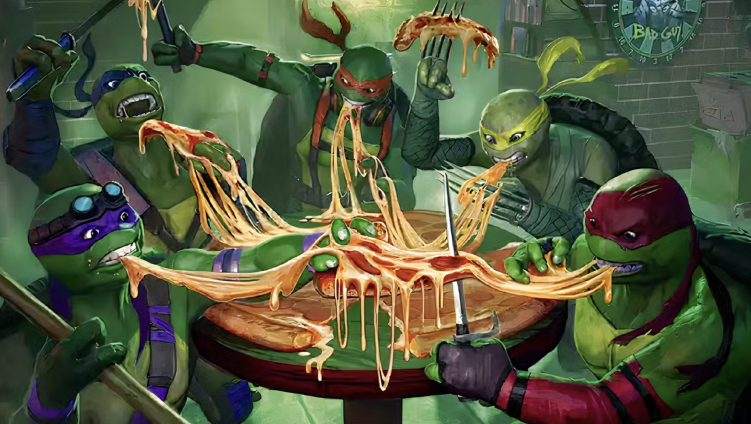
Wizards of the Coast dropped a ban hammer today, targeting the Historic format on Magic: The Gathering Arena. The sole change in the latest Banned and Restricted announcement removes Food Chain from the digital eternal format. This swift action addresses a turn-two-to-three combo that had surged to the top of Best-of-Three queues and threatened to warp the metagame.
The change was detailed in the official Magic: The Gathering Banned and Restricted Announcement released on March 23, 2026. No other formats, including Timeless, Brawl, or any tabletop Constructed formats, received adjustments in this update, making the Historic ban the sole modification.
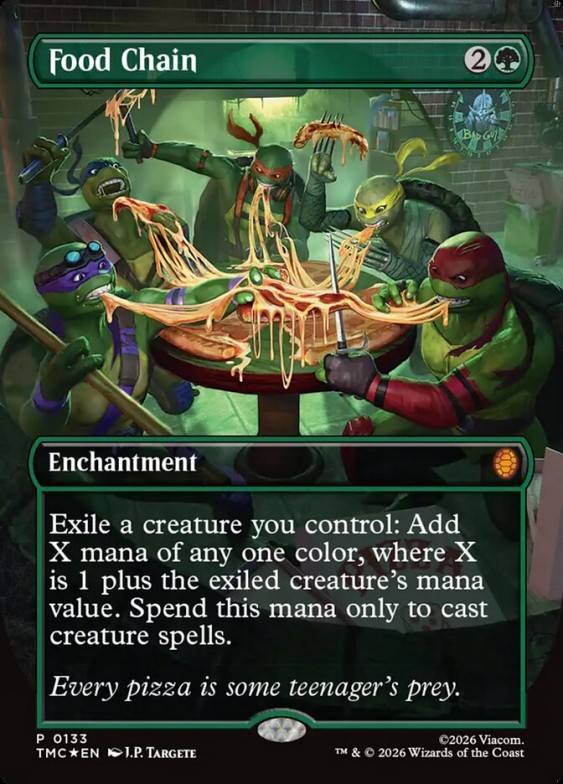
The recent Magic: The Gathering | Teenage Mutant Ninja Turtles set introduced Food Chain to Historic. Wizards of the Coast explained the reasoning behind the ban in the announcement, stating:
In retrospect, this was a mistake. We missed the interaction between Sigardian Evangel and Food Chain, which combo to create an arbitrarily large number of 3/1s. Competitive builds utilizing this interaction are still developing, but they are already near the top of Best-of-Three in both metagame share and win percentage. This is much higher than we would want for a deck that can consistently combo and end the game on turn three, and semi-consistently combo on turn two, especially with the frustrating digital execution the combo requires. Philosophically, we would also prefer to keep turn-two combo out of the range of viable Historic strategies and as a feature of Timeless. For these reasons, Food Chain is banned.
The ban targets the devastating synergy between Food Chain—a green enchantment that exiles a creature to produce mana equal to its power before returning it to hand—and Sigardian Evangel, a white creature that enables repeated recursion. By looping the two cards, players generate infinite mana and flood the board with an arbitrarily large number of 3/1 tokens. The combo routinely ends games on turn three and frequently manages the feat on turn two with strong draws, leaving opponents with little opportunity for meaningful interaction. Its dominance in Best-of-Three play, reflected in top-tier metagame share and win rates, prompted Wizards to act quickly to preserve format health.
Historic, MTG Arena’s flagship eternal format, pulls cards from virtually every set available digitally, including crossover products unavailable in paper. The format has enjoyed relative stability following recent tuning, with interactive midrange decks such as Jund and Dimir holding strong positions alongside diverse archetypes. The Food Chain deck’s arrival shattered that balance by introducing a highly consistent, low-interaction win condition that outraced most forms of disruption.
Wizards highlighted the philosophical distinction between Historic and Timeless in their reasoning. Historic is designed to avoid normalizing turn-two combo kills as a mainstream strategy, reserving that explosive power level for Timeless. The digital execution of the combo further weighed on the decision: resolving the infinite loop on MTG Arena demands numerous clicks and drawn-out animations, creating a tedious and frustrating experience for players on both sides of the table.
Originally printed in the 1997 set Exodus, Food Chain has powered fringe combo decks in Legacy for decades, kept in check by the format’s deep suite of counters and interaction. Its debut on MTG Arena via the Teenage Mutant Ninja Turtles Secret Lair product marked the first time the card entered Historic, but the unforeseen interaction with existing tools triggered an immediate ban. With Food Chain now illegal in Historic decklists, the format is poised for recalibration. Established archetypes should regain breathing room, and the metagame is expected to diversify further as players adapt.
The targeted ban underscores Wizards’ ongoing vigilance over MTG Arena formats, where digital-only introductions and cross-format synergies can produce rapid, unexpected power spikes. Historic players can anticipate continued data-driven monitoring to keep the format balanced, varied, and competitive in the wake of this change.