
Wizards of the Coast has officially revealed the complete mechanical framework for Secrets of Strixhaven, the highly anticipated Magic: The Gathering expansion that returns players to the vibrant yet secretive halls of Strixhaven University on the plane of Arcavios. This set builds upon the foundational five-college structure—Lorehold, Prismari, Quandrix, Silverquill, and Witherbloom—while introducing fresh layers of academic intrigue and hidden lore.
The mechanics emphasize preparation rituals, verbal dueling, spectacular performances, life-force manipulation, mathematical scaling, repeatable lessons, historical recursion, multicolored convergence, and scholarly artifacts. Together, these tools create a rich, synergistic environment that rewards strategic depth in both Limited draft formats and Constructed play. Each mechanic is tightly woven into the thematic identity of its associated college, encouraging players to explore interdisciplinary strategies that mirror the university’s blended magical traditions.
Prepare
At the core of Secrets of Strixhaven stands Prepare, a groundbreaking new mechanic that captures the scholarly act of arming oneself with powerful spells in advance of any challenge. Prepare appears on creature cards that feature a distinctive dual-faced layout, with the main creature occupying the primary text box and a smaller “prepare spell” inset in the lower-right corner. This inset spell carries its own unique name, mana cost, type line, and full rules text, operating as a completely independent card for most game purposes.
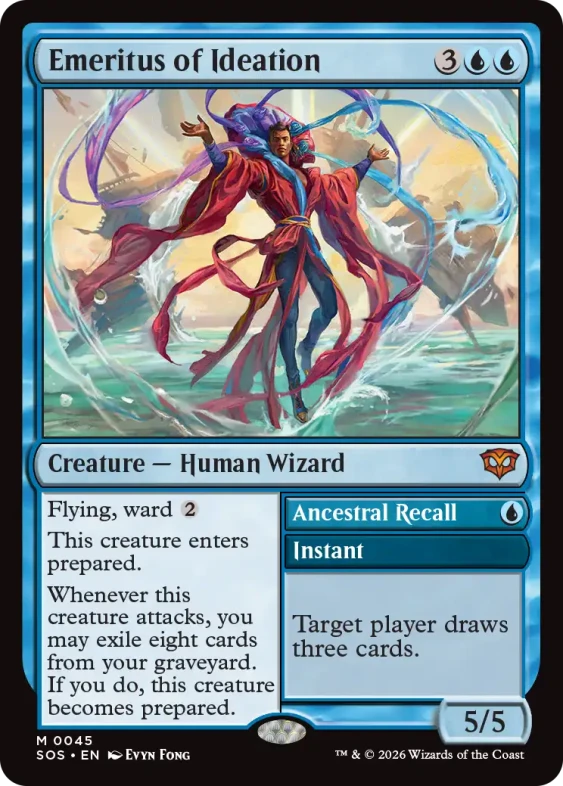
The creature side maintains all its characteristics—including name, mana cost, type line, power, toughness, and abilities—regardless of the card’s location in any game zone. This allows players to search, tutor, or reference the card solely as the creature without invoking the prepare spell. When a permanent with Prepare enters the battlefield under its owner’s control, it typically arrives already prepared. This process exiles a copy of the associated prepare spell from the card. The exiled copy remains available until resolved through casting, until the prepared permanent leaves the battlefield, or until the permanent is specifically unprepared by opposing effects.
Casting the prepare spell adheres strictly to its inherent timing rules: instants may be played at any legal opportunity, while sorceries require a main phase with an empty stack. Once successfully cast, the creature loses its prepared designation, and the spell is handled according to standard resolution procedures. A built-in safeguard prevents infinite repetition—a permanent cannot become prepared again while it already holds an exiled copy—though certain support cards, such as Emeritus of Ideation, can refresh the status to enable repeated value. Control-changing effects introduce additional tactical layers; an opponent who steals a prepared creature gains full rights to cast the waiting spell, which can dramatically shift combat or interaction sequences.
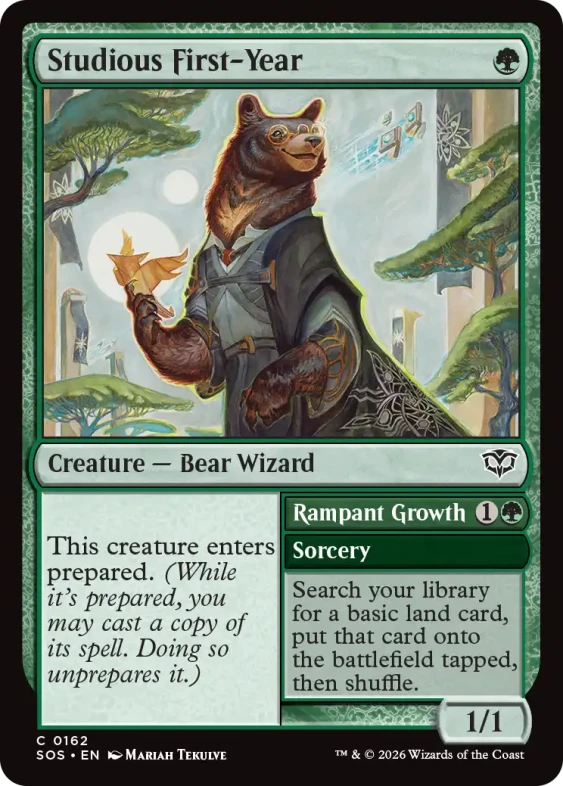
Thematically, Prepare represents diligent students who enter magical confrontations already equipped with incantations pulled from intensive study or newly discovered archives. In gameplay, it elevates simple creatures into versatile two-for-one packages that demand careful timing and board management. A card like Studious First-Year functions as a modest Bear creature while offering the ramp potential of Rampant Growth as its prepare spell, delivering early acceleration alongside a defensive presence. The mechanic integrates smoothly with blink effects, sacrifice outlets, recursion engines, and control strategies, making Prepare one of the most adaptable and replayable innovations in recent Magic: The Gathering sets.
Repartee (Silverquill)
Silverquill’s signature focus on eloquence, sharp debate, and verbal precision is perfectly embodied by the new ability word Repartee. This triggered ability fires whenever a player casts an instant or sorcery that targets one or more creatures. The resulting effect—unique to each card—always resolves prior to the triggering spell, creating opportunities for optimized sequencing such as protective buffs before removal lands or disruptive counters that enhance the original cast.
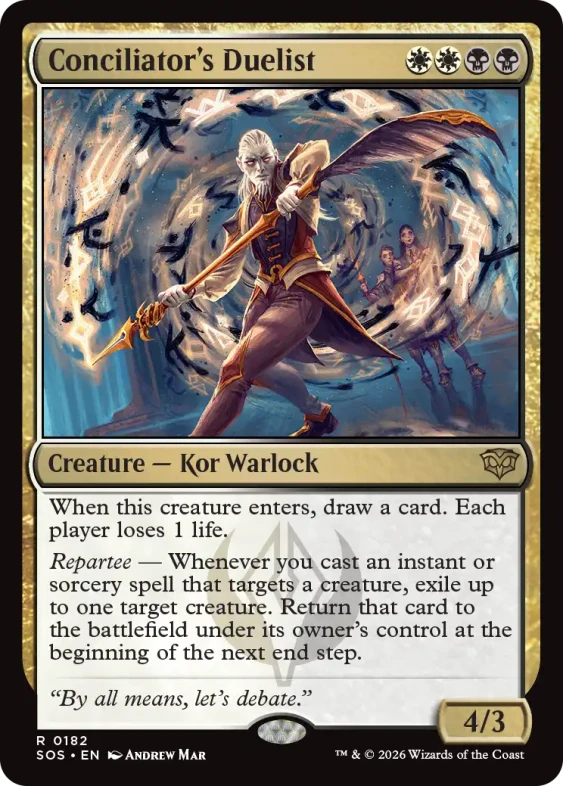
Even when the spell targets multiple creatures simultaneously, Repartee triggers only once per casting. Multiple Repartee abilities placed on the stack from the same event resolve in the order chosen by the controller, with the last-placed trigger resolving first. This timing window opens rich tactical possibilities in combat and interaction-heavy matchups.
Flavorfully, Repartee evokes the rapid-fire discourse and witty banter that define Silverquill scholars, who treat words themselves as potent magical weapons. In practice, the mechanic strongly incentivizes decks loaded with creature-targeted instants and sorceries, including removal, combat tricks, protection, and pumps. It transforms standard interaction into layered advantage engines, elevating creature-based strategies across Limited and Constructed formats alike.
Opus (Prismari)
Prismari’s passion for dramatic flair, explosive creativity, and grand performances finds its mechanical voice through the ability word Opus. Similar to Repartee, it triggers upon the casting of any instant or sorcery spell. Each Opus ability provides an immediate base effect, followed by an enhanced or alternative bonus if the total mana spent to cast the triggering spell equals five or more.
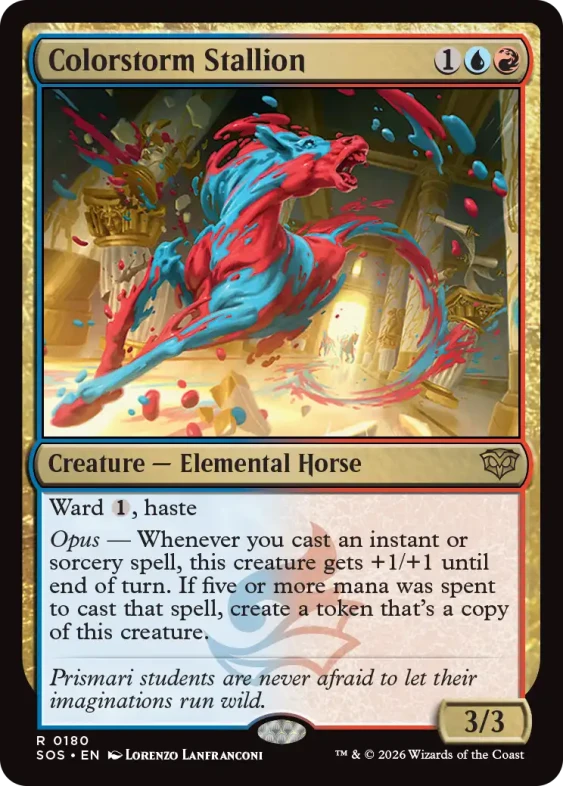
The mana total includes all payments made to cast the spell—such as additional costs or kicker—but ignores non-casting payments like ward. Multiple Opus triggers from a single spell resolve in the controller’s chosen order before the original spell resolves. This structure rewards ramp, big-mana, or dedicated spell-slinging decks, where investing heavily into a single turn generates compounding value in the form of extra damage, card advantage, token generation, or scaled board wipes.
Designs like Colorstorm Stallion capture the college’s ethos of turning modest spells into breathtaking spectacles when fueled by sufficient resources. Opus encourages players to build toward expensive finishers or creatively manipulate mana, turning the natural rhythm of a game into a theatrical crescendo capable of overwhelming unprepared opponents.
Infusion (Witherbloom)
Witherbloom’s core philosophy—that life force represents the fundamental currency of all magic—receives dedicated mechanical support via the ability word Infusion. Abilities bearing this word evaluate a simple binary condition: whether any life has been gained this turn, by any player or source. As long as life gain occurred at any point during the turn, Infusion effects activate in full, granting bonuses to spells, creatures, or other abilities.
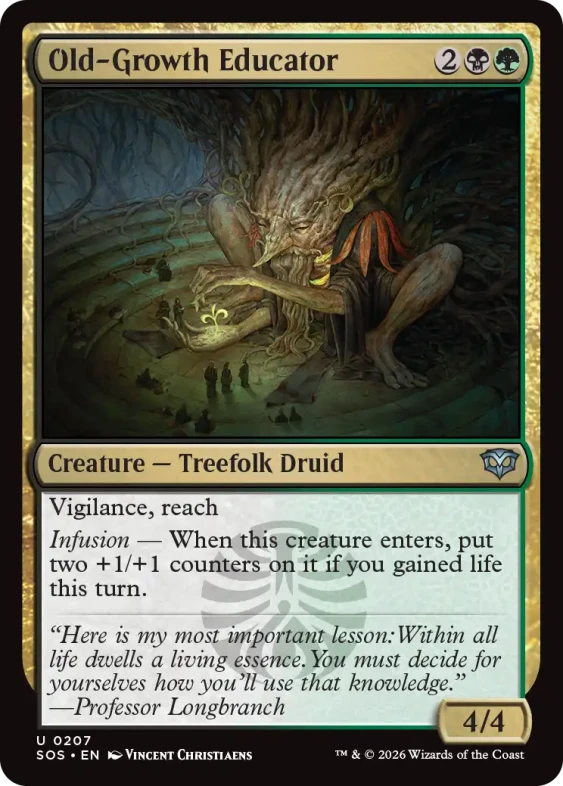
Because the mechanic depends solely on the presence of life gain rather than net totals, it remains resilient even amid aggressive life-drain strategies. Cards such as Old-Growth Educator illustrate how Witherbloom transforms incidental stabilization or proactive lifegain into sustained board dominance. Infusion pairs naturally with drain effects, dedicated lifegain engines, and cards that incidentally restore life, forming a reliable backbone for grindy midrange or aristocrats-style decks that excel in prolonged attrition battles.
Increment (Quandrix)
Quandrix’s dedication to mathematical precision, optimization, and incremental growth is captured by the keyword Increment. This ability appears primarily on creatures and triggers whenever a player casts a spell whose total mana spent exceeds the creature’s current power or toughness at the moment the spell is cast. Upon the trigger’s resolution, the creature receives a +1/+1 counter.
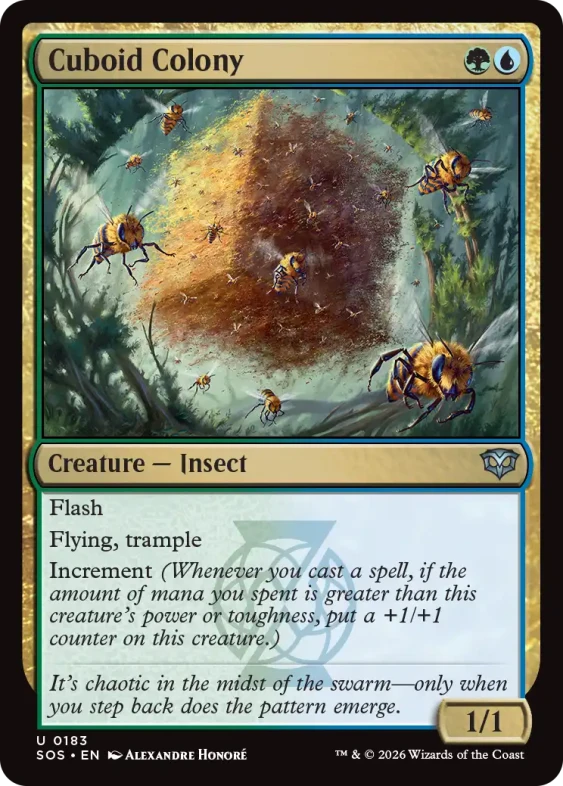
The mechanic performs checks both when the ability is placed on the stack and again upon resolution, allowing opponents occasional opportunities to respond by boosting or reducing stats. As with Opus, it counts every mana payment made to cast the spell. Cards like Cuboid Colony demonstrate how Quandrix scholars exploit every marginal advantage, converting high-cost plays into permanent, scaling power for their analytical constructs.
In Limited environments, Increment rewards natural curving into expensive threats or mana acceleration that fuels oversized bodies. In Constructed, it turns ordinary creatures into late-game monsters that grow stronger with each high-impact spell. The double-check design adds meaningful interaction without undermining the satisfying feeling of progressive growth.
Flashback (Lorehold)
Lorehold’s scholarly commitment to history, archives, and unearthing the past brings back the beloved keyword Flashback. Instants and sorceries with Flashback may be cast from the graveyard by paying an alternative cost rather than their standard mana cost. Once the spell leaves the stack—whether it resolves successfully, is countered, or otherwise fizzles—it is exiled rather than returning to the graveyard.
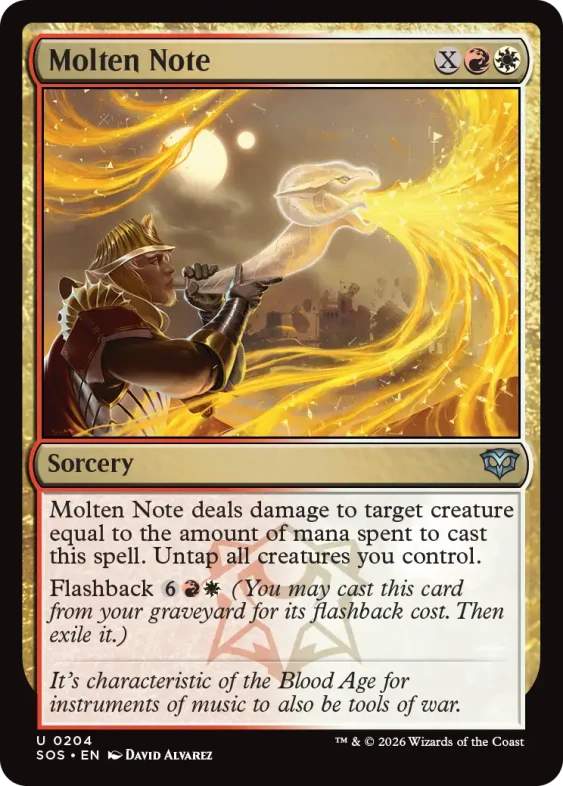
Flashback functions regardless of how the card originally entered the graveyard, supporting discard outlets, milling strategies, and self-sacrifice themes. Mana value is always calculated from the original printed mana cost, ensuring continued synergy with effects that reference converted mana cost. This return feels thematically ideal for Lorehold historians delving into Strixhaven’s recent and ancient records, enabling powerful recursive spellcasting across diverse archetypes.
Paradigm
A brand-new keyword appearing on sorceries, Paradigm delivers repeatable, long-term value that mirrors the enduring nature of academic lessons. When the sorcery first resolves, it exiles itself. Then, during each of the player’s subsequent first main phases, they may cast a free copy of the exiled card without paying its mana cost. This optional recast is available once per turn, remaining accessible even if previous copies were countered or otherwise failed to resolve.
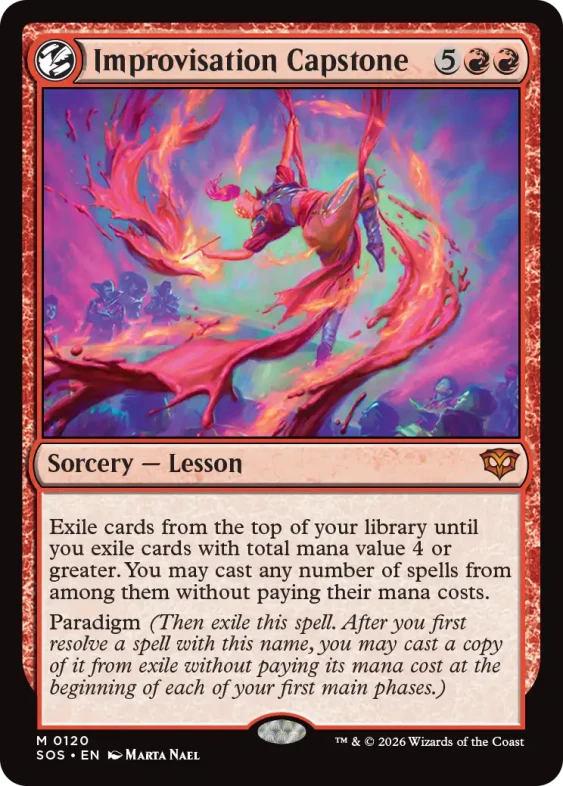
Paradigm cards carry the Lesson subtype, preserving backward compatibility with existing Lesson-support cards from earlier Strixhaven releases while replacing the older “learn” action with this self-contained recursion. Improvisation Capstone showcases the mechanic’s staying power, providing ongoing access to powerful effects without repeated resource investment. The design favors control, midrange, and value-oriented strategies that benefit from sustained pressure over singular bursts of activity.
Converge
The returning ability word Converge scales the effects of spells and permanents according to the number of distinct colors of mana spent to cast them, with a maximum of five colors. This count includes mana paid through additional or alternative costs but excludes taxes or non-casting payments. For permanents, it references the colors actually spent when the spell became that permanent on the battlefield. Copied spells cast without mana payment register as zero colors.
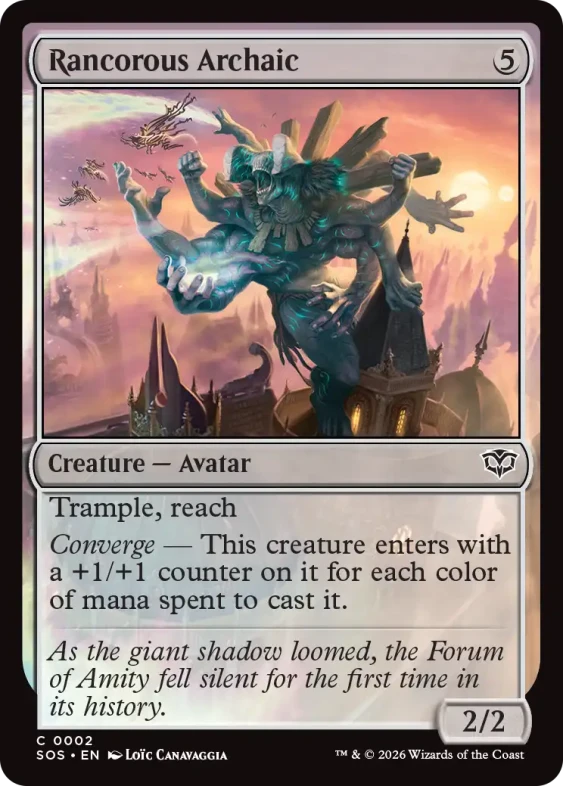
Converge promotes diverse mana bases and interdisciplinary deck construction, turning flexible five-color mana into significant payoffs. It mechanically unites the five colleges, encouraging both draft and Constructed decks to embrace multicolored strategies that celebrate Arcavios’ blended magical heritage.
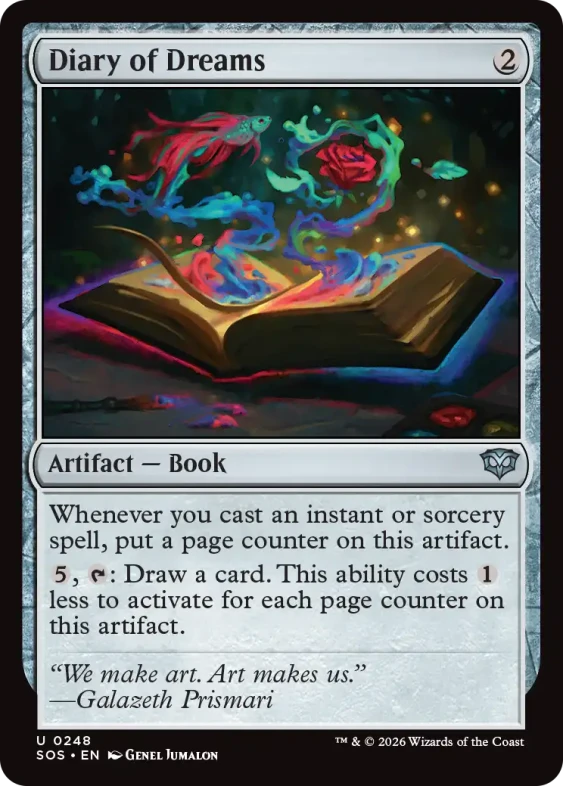
Book
Secrets of Strixhaven also introduces the Book artifact subtype, representing the countless tomes, grimoires, and scholarly texts that define university life and magical research. Certain existing artifact cards within the Magic: The Gathering database have received Oracle updates to include this subtype, quietly expanding future design space for Book-related interactions without changing their core functionality. This new subtype reinforces the set’s overarching themes of knowledge preservation, library science, and the pursuit of hidden wisdom.
Secrets of Strixhaven releases worldwide on April 24, 2026. Prerelease events for the new set will run from April 17 through April 23, giving players the first chance to experience these mechanics firsthand in Sealed and Draft events at local game stores during the official one-week window.