Production has officially begun on a fresh Neon Genesis Evangelion television series, marking the franchise's most significant new animated project since the conclusion of the Rebuild films and arriving exactly thirty years after the original debut.
The revelation came as the closing highlight of the EVANGELION:30+; 30th ANNIVERSARY OF EVANGELION festival, held February 21–23, 2026, at Yokohama Arena. During the final program on February 23, organizers unveiled the new series under the banner of the franchise's "Next Genesis," signaling an ambitious continuation of the storied property.
Leading the creative team is Yoko Taro, the visionary behind the NieR series including the acclaimed NieR:Automata, who is overseeing series composition and screenplay. Directing is a collaboration between Kazuya Tsurumaki—veteran of the Rebuild of Evangelion tetralogy and director of Mobile Suit Gundam GQuuuuuuX—and Toko Yatabe, who previously served as assistant director on Evangelion: 3.0+1.0 Thrice Upon a Time and contributed to titles such as Chainsaw Man.
The soundtrack will feature compositions by Keiichi Okabe, longtime musical partner of Yoko Taro on the NieR projects. Animation production is a joint effort between Studio Khara, founded by Hideaki Anno and home to the Rebuild films, and CloverWorks, the studio behind major series including Spy x Family.
Details remain sparse at this early stage: no premiere window, episode count, cast information, or storyline specifics have been shared. The announcement included a short teaser visual and coincided with other festival content, such as a newly produced 13-minute anime short centered on Asuka.
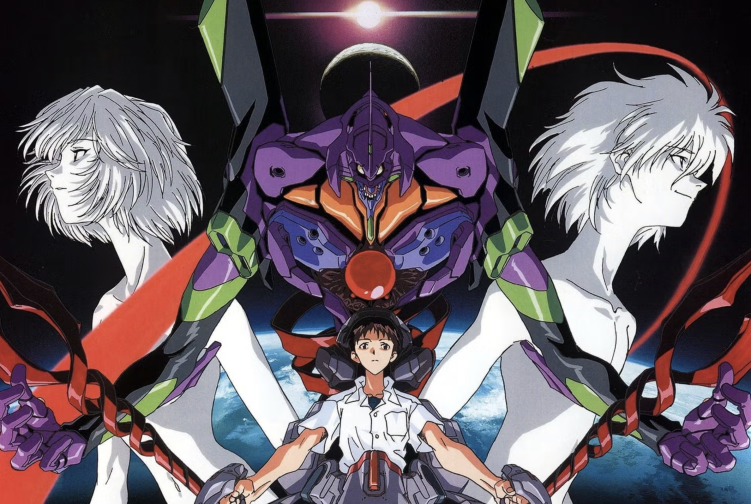
Neon Genesis Evangelion remains one of anime's most psychologically layered and philosophically dense works. The story unfolds in a devastated world still recovering from the apocalyptic Second Impact event. Humanity's last line of defense against mysterious invading entities called Angels consists of towering bio-mechanical weapons known as Evangelions, piloted exclusively by select adolescents.
At the heart of the narrative is Shinji Ikari, a deeply conflicted teenage boy summoned by his estranged father to pilot Unit-01. Through intense mecha combat sequences and extended introspective sequences, the series delves into themes of depression, interpersonal disconnection, fear of intimacy, parental abandonment, the search for self-worth, and the boundaries between individual consciousness and collective existence. Religious iconography, psychoanalytic theory, and existential questions are interwoven throughout, creating a narrative that challenges viewers on both emotional and intellectual levels.
This forthcoming series continues a tradition of evolution within the franchise. The original Neon Genesis Evangelion television anime was directed by Hideaki Anno, produced at Gainax, and broadcast for 26 episodes from October 1995 to March 1996. It was followed in 1997 by two theatrical releases, Death & Rebirth and The End of Evangelion. After a lengthy hiatus, the property returned through Studio Khara's Rebuild of Evangelion film quartet—a reimagined retelling that began with the 2007 theatrical release of the first installment and concluded with Evangelion: 3.0+1.0 Thrice Upon a Time in 2021.
Fans interested in revisiting the existing Evangelion catalog can currently stream the original 1995–1996 television series along with its companion films on Netflix, which maintains broad international licensing rights for the franchise.
Source: Official Evangelion website