
The highly-anticipated banned and restricted announcement for the Commander format in Magic: The Gathering proved to be much less sweeping than certain enthusiasts had hoped. Speculation swirled around potential removals like Primeval Titan or Jeweled Lotus from the banlist, yet when the updates were revealed on February 9, 2026, only two cards were ultimately lifted—and one of those shifts is relatively uncontroversial.
The cards in question are Biorhythm and Lutri, the Spellchaser, both of which have been removed from the Commander banlist under specific conditions, as detailed by Wizards of the Coast in their official announcement. Senior game designer Gavin Verhey provided insights into the reasoning behind these decisions, emphasizing a balance between format health and player enjoyment. This marks a cautious approach to refining the popular multiplayer format, which emphasizes casual play and deck-building creativity.
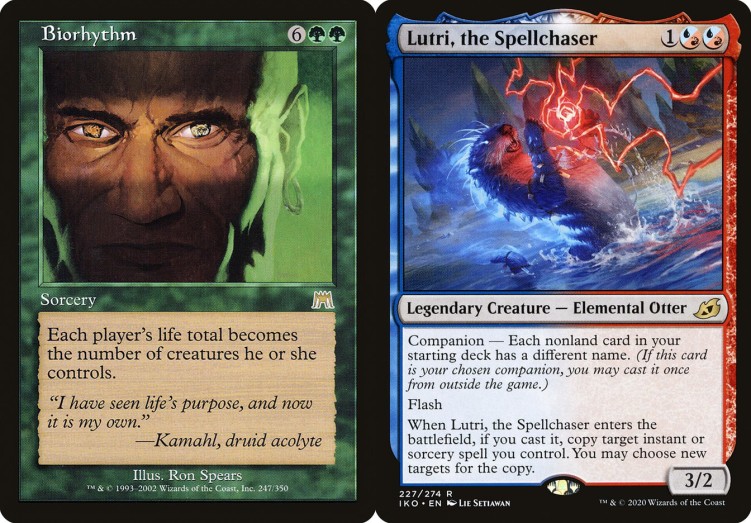
Biorhythm, a sorcery from the Onslaught set originally printed in 2002, sets each player's life total equal to the number of creatures they control. It was banned in Commander for its potential to abruptly end games, especially in scenarios where one player dominates the board with tokens or other creature swarms. The decision to unban it stems from its high mana cost—eight mana, including two green—which makes it challenging to cast consistently without significant setup. Wizards of the Coast views it as aligning with other formerly banned cards like Coalition Victory, Sway of the Stars, and Worldfire, which were unbanned in recent years without destabilizing the format. These cards share a theme of dramatic, game-altering effects that can create memorable swings but aren't easily abused in every deck.
Verhey noted the potential for excitement, stating, "We accept there is some risk here, but it's also a card with big moments that will generate some excitement. I personally can imagine a lot of games totally turned upside down in a memorable way as a Biorhythm resolves and suddenly the game is changed. It makes for a very memorable experience, as long as it isn't happening too often." This unban allows players to experiment with Biorhythm in green-heavy strategies, potentially adding flair to games without overwhelming the meta.

In contrast, Lutri, the Spellchaser, from the Ikoria: Lair of Behemoths set released in 2020, has a more nuanced adjustment. This otter elemental has an enters-the-battlefield ability that copies an instant or sorcery spell, making it a versatile tool in blue-red decks. However, its companion mechanic—requiring all nonland cards in the deck to have unique names—was the core issue in Commander, a singleton format where this condition is inherently met. This effectively granted every qualifying deck an extra card from the outset, leading to its initial ban shortly after release. The unban now permits Lutri in the main deck or as a commander, but it remains prohibited as a companion to avoid mandatory inclusion. Verhey elaborated on the original concerns in a detailed explanation:
Lutri itself is far from too strong of a card in a game of Commander. However, the problem is that if Lutri is legal as a companion, every deck for the rest of time that has a blue-red color identity should have Lutri as a companion. There is absolutely no downside to doing so. We don't want blue-red decks to have access to an extra card in every game of Commander for all time (and it's not like it's a color combination that needs the help!) nor have players who don't have access to Lutri get told they 'have to' play Lutri. It's a really undesirable outcome to add a card that shows up at that level of ubiquity.
This targeted unban addresses the ubiquity problem while allowing Lutri's flavorful ability to shine in constructed decks, appealing to players who enjoy spell-slinging archetypes.
These changes reflect Wizards of the Coast's ongoing philosophy for Commander, managed by the independent Rules Committee in collaboration with the company. The format, which supports up to four players and centers on a legendary creature as the commander, has grown immensely since its inception as Elder Dragon Highlander. By unbanning cards like Biorhythm and Lutri, the committee aims to foster diversity without introducing power imbalances. For instance, Biorhythm could invigorate strategies built around creature proliferation, such as those using Doubling Season or elf tribal themes, while requiring opponents to maintain board presence as a countermeasure. Similarly, Lutri enhances instant and sorcery-focused commanders like Niv-Mizzet, Parun or The Locust God, providing value without the automatic advantage that prompted its ban.
Beyond these unbans, the update included a minor addition to the "Game Changers" list with Farewell, a white sorcery that can exile various permanents and reset the board. This designation allows playgroups to opt out of such effects if they prefer less disruptive games, underscoring the format's emphasis on social agreement.
Overall, the February 2026 adjustments prioritize subtle tweaks over major overhauls, ensuring Commander remains accessible and fun for its global community. Players can now incorporate these cards into their collections, potentially sparking new deck ideas in casual and competitive pods alike. With Magic: The Gathering continuing to evolve through sets like the upcoming Murders at Karlov Manor, these banlist updates help maintain equilibrium in one of the game's most beloved formats.