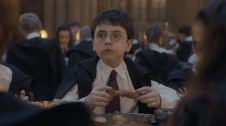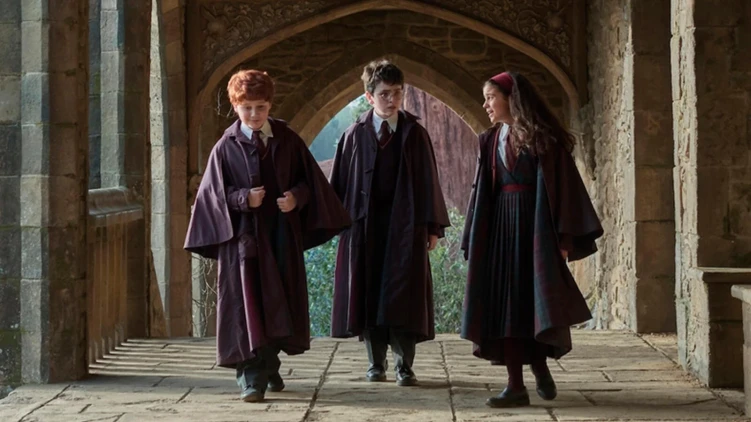
One shot in the first trailer for HBO's Harry Potter series stopped fans mid-scroll: the Great Hall, with its long house tables and soaring ceiling, looks strikingly like the one from the films. The resemblance sparked an obvious question about how closely the new series intends to follow what came before it.
Director and executive producer Mark Mylod, who is adapting J.K. Rowling's books alongside showrunner Francesca Gardiner, a writer on Succession, has now explained the thinking behind that choice in an interview with James Hibbs for Radio Times via Wizard's Rest on X. A devoted fan of the books, Mylod admits the job initially filled him with "absolute terror" and that he spent days framing a polite refusal, knowing the role would mean total immersion in the wizarding world for a long period.
What changed his mind was a clear tonal vision for the material. Mylod pictured the series as grounded but slightly heightened, with a deeper emotional connection to the characters, and he kept coming back to the energy of 400 child actors filling the Great Hall.
The scale of that commitment is already considerable. The first series adapts Harry Potter and the Philosopher's Stone across eight parts, and a second series is already filming.
The Great Hall Follows the Harry Potter Books, Not the Films
On the Great Hall itself, Mylod is clear that the design is no accident, but he rejects the idea that the production is copying the films. "The Great Hall is very specifically described in the books," he explains, adding that the team wanted to serve the books' description above all else.
Where the books gave the production no specific different direction to take, Mylod says the team made "a deliberate kind of baton-handing-over" instead. The choice was made out of respect for the emotional connection audiences already have to the films' version of Hogwarts.
Dursley Scenes Lean Into 1990s Detail
One place the series does take a clearly different direction is the Muggle world, where the Dursleys' roles have been expanded. Bel Powley plays Aunt Petunia, Daniel Rigby plays Uncle Vernon and Amos Kitson plays Dudley, and their scenes are explicitly set in the 1990s.
That period setting runs through the details, from dated fashion and oversized spectacles to a near-total absence of modern technology. "It's a time before social media, before mobile phones and there's a certain innocence to that," Mylod says.
Practical Magic And A Hand-Built Hedwig
Mylod also insisted that the magic feel tactile wherever possible, building effects from natural phenomena rather than CGI. Letting the young cast interact with the real thing hugely enhances their performances, he says, though he is quick to praise the visual effects department's work wherever CGI is used.
That philosophy extends to Harry's owl, Hedwig, who is a physical puppet rather than a digital creation. Her fledgling version was built with around 18 mini motors and hand-stitched using thousands of small feathers.
To fans still wary of a remake, Mylod points out that "These stories will be around for centuries" and invites them to try an episode and judge the cast and the writing for themselves. They will not have long to wait, as Harry Potter premieres on December 25, 2026, on HBO.